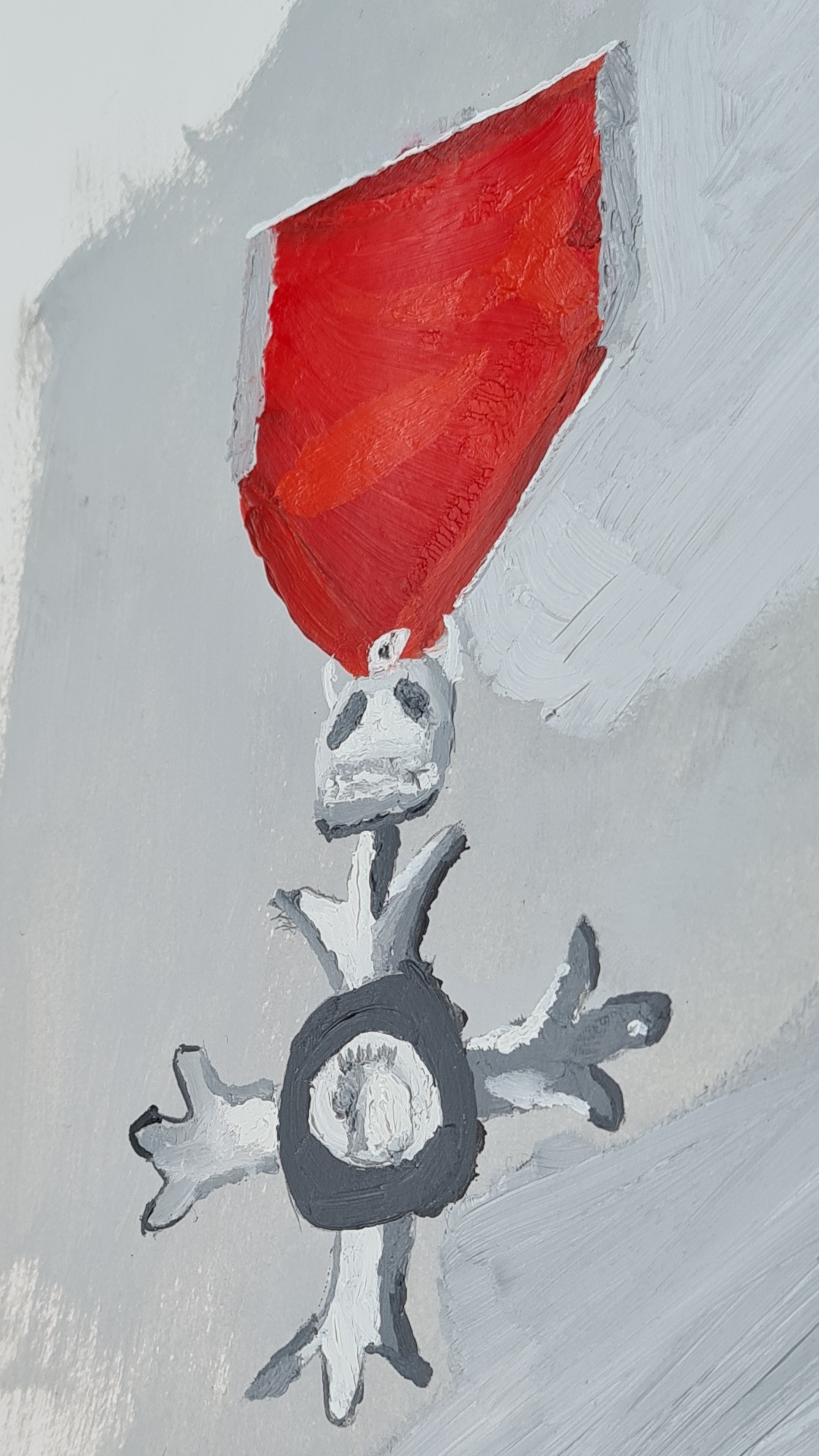
After spending some time, across various creations, and getting used to blending acrylic paints to get vibrancy and more natural looks across artworks, acrylic paints had been noticed to dry quite quickly, sometimes creating a challenge on the blending aspect of the creation.
So with this in mind, the next media to move to was oil paints. Oil paints are known to take longer to dry and, as a result, therefore are easier to blend to get the right tones and features within a creation.
There is an ambition to use oils more to create a more ‘grand’ creation than others that have been done so far, with acrylic paints and chalk pastels. But before that point is reached, it is always worthwhile undertaking smaller creations to get used to the new media – as each media has different properties which affect the techniques employed. So, this creation was a trial run, if you like, of using the new media of oil paints and getting accustomed to how it is best applied to the paper.

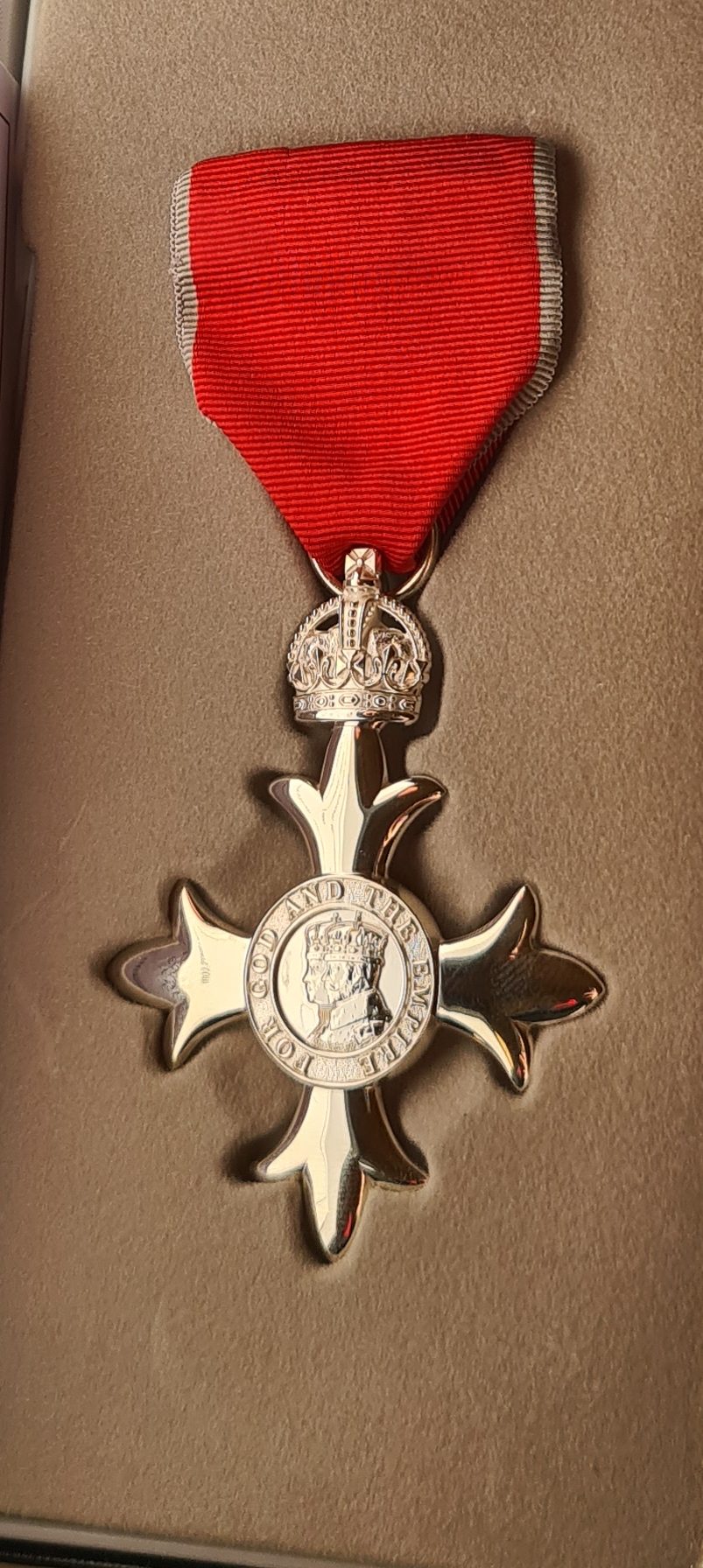
On to the subject of this creation – an insignia. Insignia is a medal awarded to those that are honoured with a rank within the Most Excellent Order of the British Empire. There are several ranks within The Order as well as a civilian division and a military division. This particular insignia that forms the subject of this creation is the insignia for a Member of the Order of the British Empire, civilian division.
Just a side note on the Order of the British Empire. The Order was established by King George V in 1917 to honour those who had served in a non-combative role and expanded the Order to reward contributions to the Arts, Sciences, Charitable work and Public Service. The Order is comprised of five classes across both military and civilian divisions. The honours are awarded by the monarch, on the advice of an independent Honours Committee which makes nominations to the UK Prime Minister, who then submits their recommendations to the monarch, who at the time of writing this article is Queen Elizabeth II, who then awards the nominated persons with the recommended honour. The Honours process runs twice a year, once for the Queen’s Birthday, which is in June, and then again at the end of the year to mark the New Year.
Whilst the posts on this site is primarily written in a generic way and don’t include personal attributes. However, for this creation, it seems necessary to mention the reason for having an insignia for the subject of the creation. In 2021, I was honoured with the rank of Member of the Order of the British Empire for services to education. Honour recipients receive their insignias at a ceremony, called an investiture, at a royal household where a senior member of the British Royal Family presents the recipient with the award and insignia.
As with all creations noted on this site, each one has a reason behind undertaking the artwork and this one was no different, but rather more personal than the others.
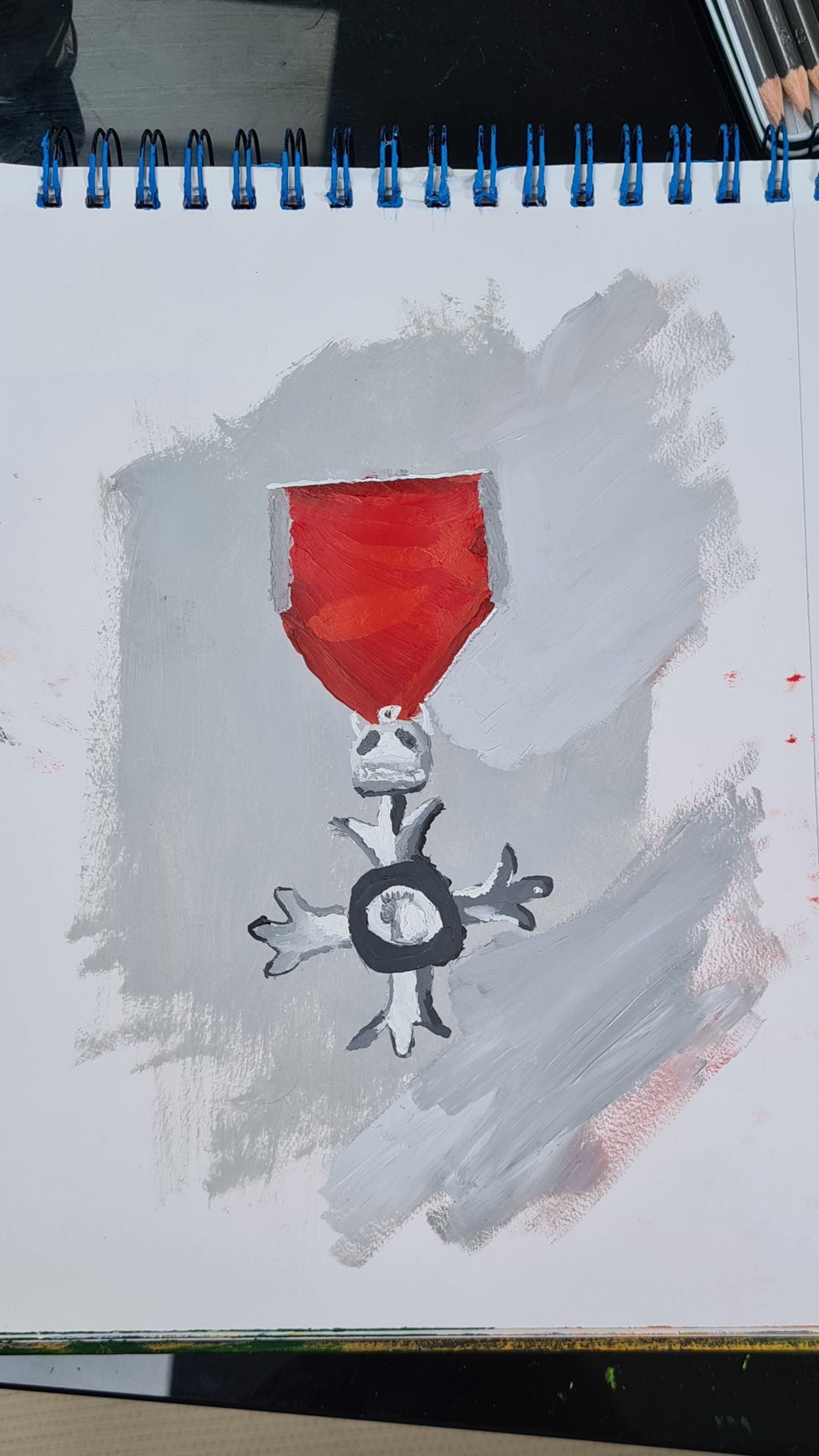
Non-geometric shapes are found to be challenging, especially shapes that haven’t been drawn before. This is very clear in this creation as the insignia doesn’t have the smooth joined curves it should have – but as mentioned above, this is a trial piece, so it’s not something that is fundamental to get right for the creation. After all, art is about giving your own take on subjects of your choice. This was exactly the case for this creation.
Overall, the creation is identifiable as an insignia but is by no means perfect. However, it was a good start to getting used to using oil paints and understanding their interaction and how they portray on paper. More creations in the future will use oil, and hopefully, each creation made with oil paints will improve. After all, for skills to develop and mature, you need to practise.
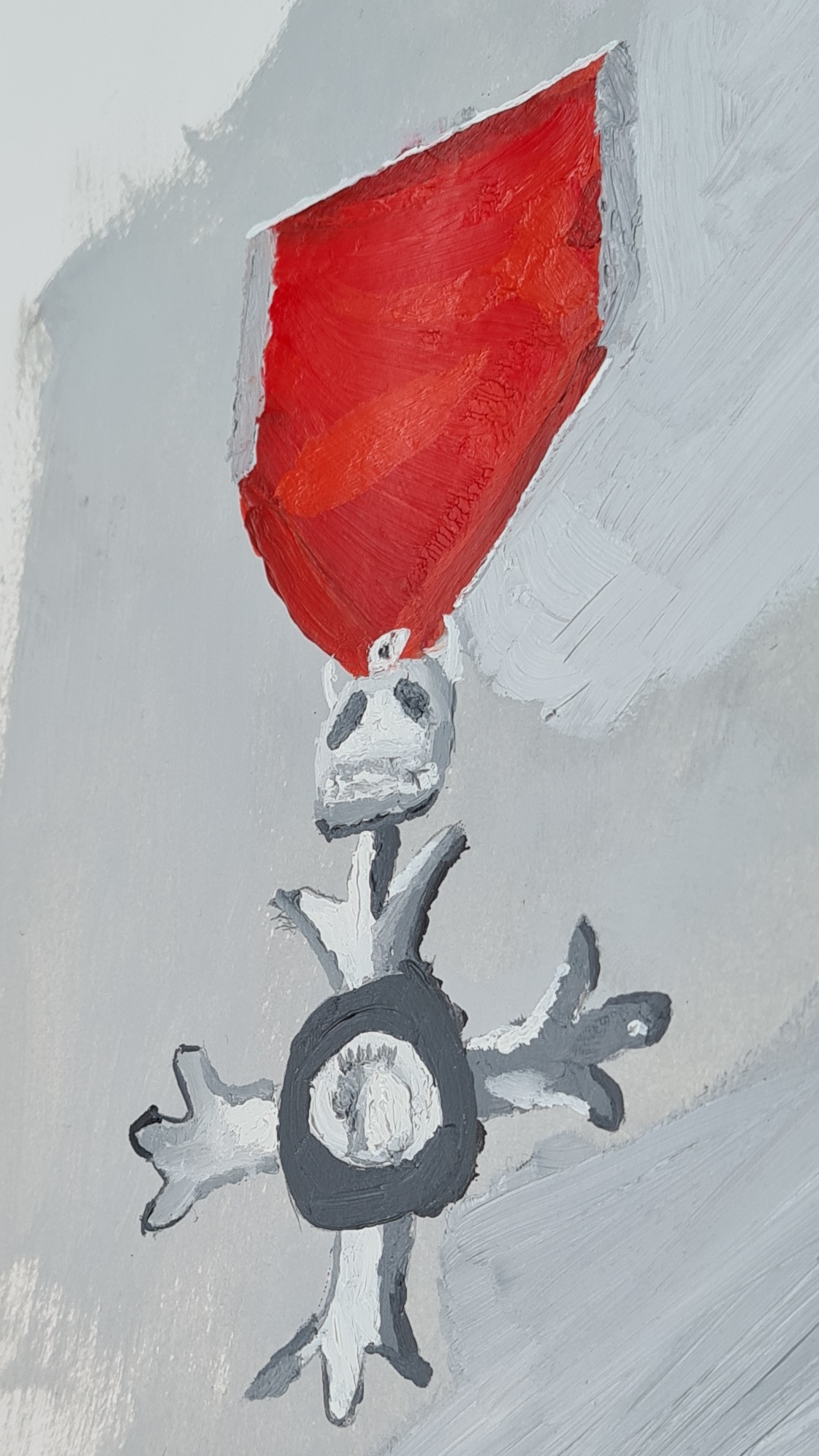
Finally, below is a revolving gallery of different angles from this creation. Also in the gallery, is the reference image used for this creation.

This blog post is available in audio as a podcast and can be found here: The Insignia audio
 Artwork in Progress
One thought on “The Insignia”
Comments are closed.